Academic Resources
Please find a selection of published articles related to the scientific study of parental embodied mentalizing.
Does expectant fathers' attachment style or depressive mood relate to their embodied mentalizing capacity of their 12-month-old infant?
Hedvig Svendsrud a,b,*, Mona Bekkhus a, Olaf Lund b, Dana Shai c, Rose Spencer d, Lars Smith a, Vibeke Moe a, Stella Totsi e, Anne Karin Ullebø b, Eivor Fredriksen a
Parental embodied mentalizing is about how parents show with their body that they hold in mind their infants' mind. The main study's aim was to explore what influences fathers' embodied mentalizing. A random sample of200 fathers and their 12-month-old infants were drawn from a large longitudinal, population-based dataset, the “Little in Norway (LiN)” study. Fathers' partner related attachment style was assessed at enrollment, symptoms of depression were measured four times during pregnancy and at 12 months postpartum, as was also parenting stress. Videotaped father-infant interactions were coded with the Parental Embodied Mentalizing Assessment (PEMA). Results showed that fathers of girls were demonstrating a higher capacity for embodied mentalizing compared to fathers of boys. There were no direct effects of prenatal depressive symptoms or attachment style on fathers embodied mentalizing, suggesting that lower levels of attachment insecurity and depressive symptoms do not necessarily compromise fathers' capacity for embodied mentalizing. However, depressive symptoms during
pregnancy increased the likelihood of postpartum depressive symptoms and parenting stress. In combination, these increased risks were related to poorer embodied mentalizing in fathers. This suggests that being depressed both during pregnancy and when the infant is 12 months, as well as experiencing stress in the parenting role, may be risk factors for compromised embodied mentalizing.
Link to PaperParental Embodied Mentalizing AssessmentTM as a function of parenting stress and emotion regulation difficulties: a comparative study between postpartum depressed and nondepressed mother-infant dyads
Virginia Simon1,2*, Steffen Zitzmann3, Frank Vitinius2,4 and Brigitte Ramsauer1,5
In the early preverbal mother-infant communication, the impact of postpartum depression (PPD) on Parental Embodied Mentalizing (PEM) remains unclear. PEM may also depend on maternal parenting stress and emotion regulation difficulties. This study is the first to investigate PEM in mothers with and without PPD using the clinical coding system Parental Embodied Mentalizing Assessment (PEMATM). It was hypothesized that PPD-mothers exhibit more PEMATM risk and fewer protective factors as a function of higher parenting stress and greater difficulties in emotional regulation compared to controls.Verbal and nonverbal parental mentalizing profiles: Distinct profiles of mind-mindedness and embodied parental mentalizing according to infant attachment and parental factors
Gagné, K. Shai, D., Rein, N., Meins, E., Tarabulsy, G. M., Lemelin, J.-P., Bernier, A., Caron, P.- O., &; Morizot, J. (2025).
Verbal and nonverbal parental mentalizing profiles: Distinct profiles of mind-mindedness and embodied parental mentalizing according to infant attachment and parental factors. Infant Behavior and Development, 80, 102113.How parents connect with their babies—both through what they say and how they act—plays a big role in a child’s first relationships. In a study of over 400 mothers and babies from Canada, the UK, and Israel, we watched moms playing with their infants aged 6–8 months and then checked the babies’ attachment at 15-16 months. We found four different parenting styles when it came to mentalizing: very low, low, high, and inconsistent. We found that babies whose parents were consistently strong mentalizing in both words and actions were more likely to form secure attachments. In other words, when parents really tuned in—both in what they said and how they responded physically—their babies felt safer and more connected. This study shows that everyday mentalizing ways of talking and interacting with a baby can shape how secure and confident that child feels in their first relationships.
Identifying embodied risk and protective factors in mothers with postpartum depression and comorbidities using Parental Embodied Mentalizing Assessment
Simon, V., Spencer, R., Zitzmann, S., Shai, D., Vitinius, F., & Ramsauer, B. (2025).
Identifying embodied risk and protective factors in mothers with postpartum depression and comorbidities using Parental Embodied Mentalizing Assessment™. Journal of Affective Disorders.Many moms with postpartum depression (PPD) also deal with other mental health challenges like anxiety or personality disorders. But how do these issues affect the embodied way a mother connects with her baby—especially through bodily movement during everyday interaction? To find out, researchers watched short videos of 68 moms playing with their babies (3 to 10 months old). They used a specialised tool - Parental Embodied Mentalizing Assessment™(PEMA™) - to see how well moms “tuned in” to their babies through bodily movement, touch, and physical presence. They found that moms with only PPD were often still emotionally present. But when PPD came with anxiety or personality disorders, moms tended to struggle more—with each condition affecting the parent-child bond differently. This research helps us better understand how mental health shapes early parenting and a mother’s embodied communication, so families can get the right kind of support from the start and professionals can provide tailored support to each mother’s need.
I’m with you, baby: Using parental embodied mentalizing in a pilot study to capture change following the circle of security parenting intervention
Shai, D., Boris, N., Brandtzaeg, I., Torsteinson, S., Spencer, R., Haugaard, K., & Smith-Nielsen, J. (2024). Scandinavian journal of psychology, 65(2), 321–330.
Link to PaperMother-infant interaction context matters for verbal and non-verbal parental mentalization: an initial portrait of associations between parental embodied mentalizing, mind-mindedness, and maternal characteristics in a structured and unstructured context
Gagné, K., Lemelin, J., & Tarabulsy, G. (2023). Frontiers in Psychology, 14.
Link to PaperNon-verbal and verbal parental mentalization as predictors of infant attachment security: Contributions of parental embodied mentalizing and mind-mindedness and the mediating role of maternal sensitivity
Gagné, K., Lemelin, J-P., & Tarabulsy, G. (2021). Infant Behavior and Development, 65, 101622.
Link to PaperTrust me! Parental embodied mentalizing predicts infant cognitive and language development in longitudinal follow-up
Shai, D., Laor Black, A., Spencer, R., Sleed, M., Bardon, B., Nolte, T., & Fonagy, P. (2022). Frontiers in Psychology, 13.
Link to PaperParental embodied mentalizing: Associations with maternal depression, anxiety, verbal mentalizing, and maternal styles of interaction
Ierardi, E., Dascalu, A., Shai, D., Spencer, R., & Crugnola C, R. (2022). Journal of Affective Disorders, 311, 472–478.
Link to PaperThe mediating role of parental embodied mentalizing in the longitudinal association between prenatal spousal support and toddler emotion recognition
Afek, E., Lev-Wiesel, R., Federman, D., & Shai, D (2022). Infancy, 27(3), 609–629. Link to Paper
Studying the process of psychoanalytic parent–infant psychotherapy: Embodied and discursive aspects
Avdi, E., Amiran, K., Baradon, T., Broughton, C., Sleed, M., Spencer, R., & Shai, D. (2020). Infant Mental Health Journal, 41(5), 589–602.
Link to PaperDoes Postpartum Depression Affect Parental Embodied Mentalizing in Mothers With 4-Months old Infants?
Garset-Zamani, S., Cordes, K., Shai, D., Spencer, R., Stuart, A. C., Køppe, S., & Væver, M. S. (2020). Infant Behavior and Development, 61, 101486.
Link to PaperParental embodied mentalizing and its relation to mind-mindedness, sensitivity, and attachment security
Shai, D., & Meins, E. (2018). Infancy, 23(6), 857–872.
Link to PaperThe Important of Parental Verbal and Embodied Mentalizing in Sharing Parental Experiences of Stress and Coparenting
Shai, D., Dollberg., D., & Szepsenwol, O. (2017). Infant behavior & development, 49, 87–96.
Link to PaperParental Embodied Mentalizing: How the Nonverbal Dance Between Parents and Infant Predict Children's Socio-Emotional Functioning
Shai, D., & Belsky, J. (2017). Attachment & human development, 19(2), 191–219.
Link to PaperBeyond Words: Parental Embodied Mentalizing and the Parent-Infant Dance
Shai, D., & Fonagy, P. (2014). In M. Mikulincer & P. R. Shaver (Eds.), Mechanisms of social connection: From brain to group (pp. 185–203). American Psychological Association.
Link to PaperInfant Massage: Is the Medium the Message?
Underdown, A., & Shai., D (2014). International Journal of Birth and Parenting Education, 2(1), 27-30.
Link to PaperWhen Words Just Won't Do: Introducing Parental Embodied Mentalizing
Shai, D., & Belsky., J (2011). Child Development Perspectives, 5(3), 173–180.
Link to PaperParental Embodied Mentalizing: Let's Be Explicit About What We Mean by Implicit
Shai, D., & Belsky. J. (2011). Child Development Perspectives, 5(3), 187–188.
Link to Paper
Further Resources
Affect Regulation, Mentalization and the Development of the Self
Fonagy, P., Gergely, G., & Jurist, E.L. (Eds.). (2002). (1st ed.). Routledge.
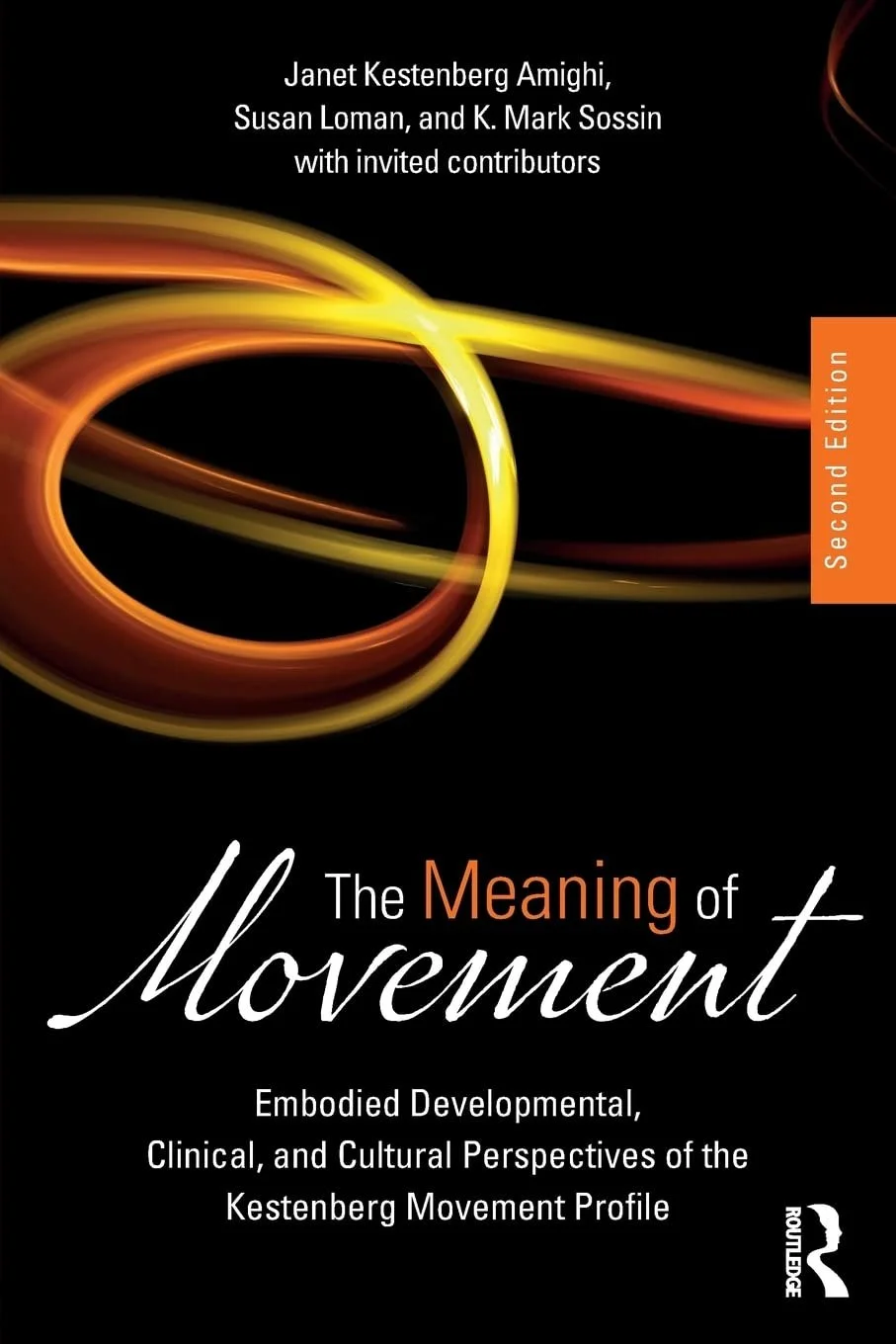
Kestenberg Amighi, J., Loman, S., & Sossin, K.M. (Eds.). (2018). (2nd ed.). Routledge.